


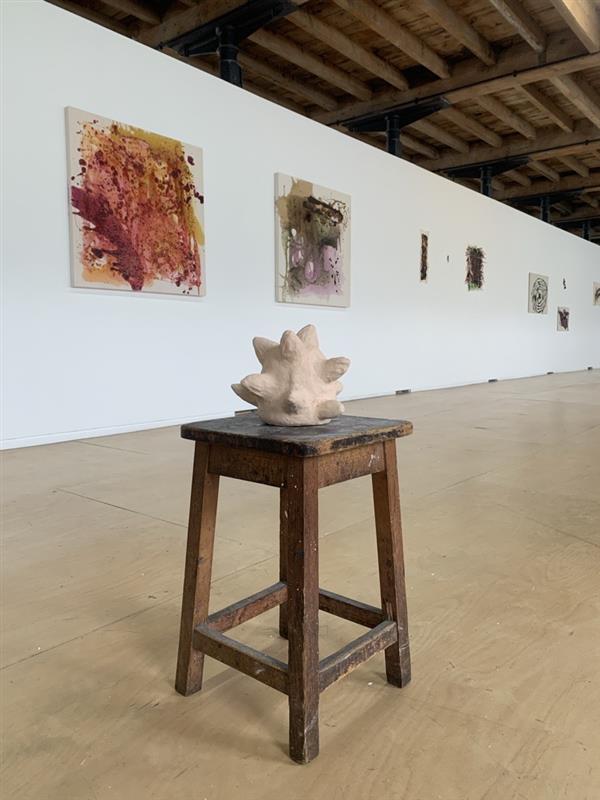

My residency project, titled Ephemeral Ooze, took place from the 26th of August till the 6th of September, 2025, at Everybody Arts Gallery in Halifax, West Yorkshire. This project was designed to explore the production and application of biomaterials in a visual arts practice, experimenting with materials such as agar agar plastic to create drawings, and alginate yarn with techniques such as weaving and printing. Not only was this to serve a purpose of developing a more environmentally sustainable artistic practice, but also as a conduit to translate the sensorial, temporal and cyclical natures of bodies and ecosystems.
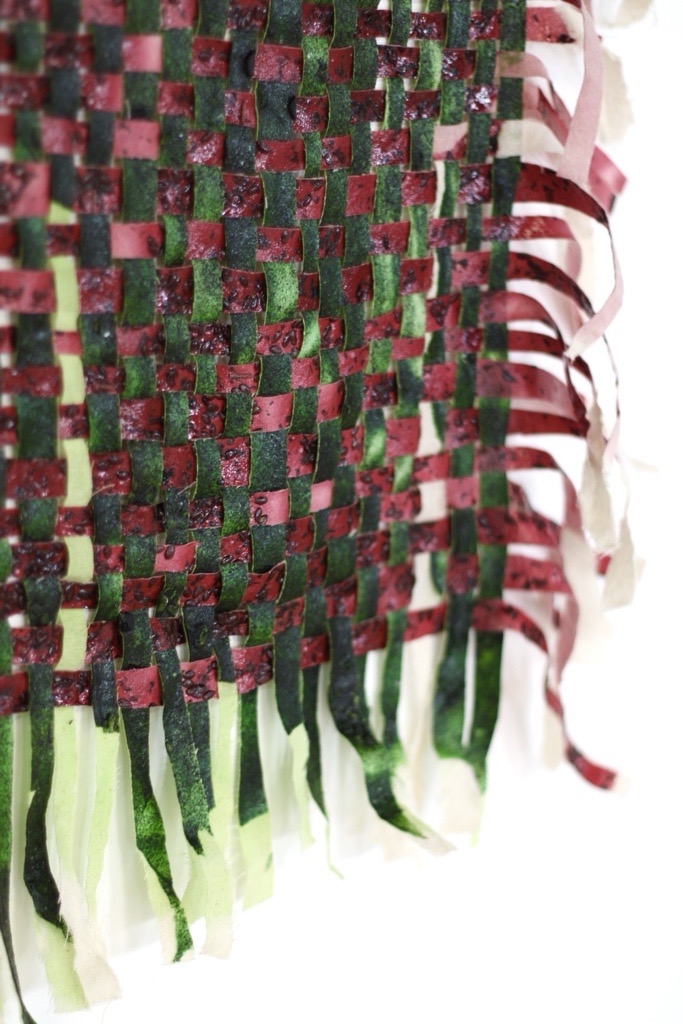
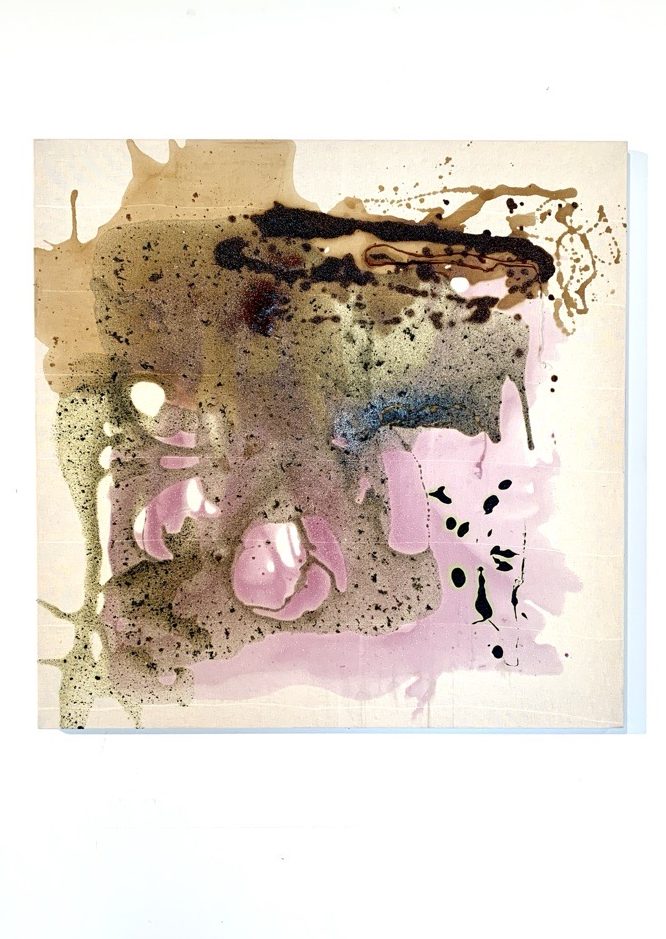
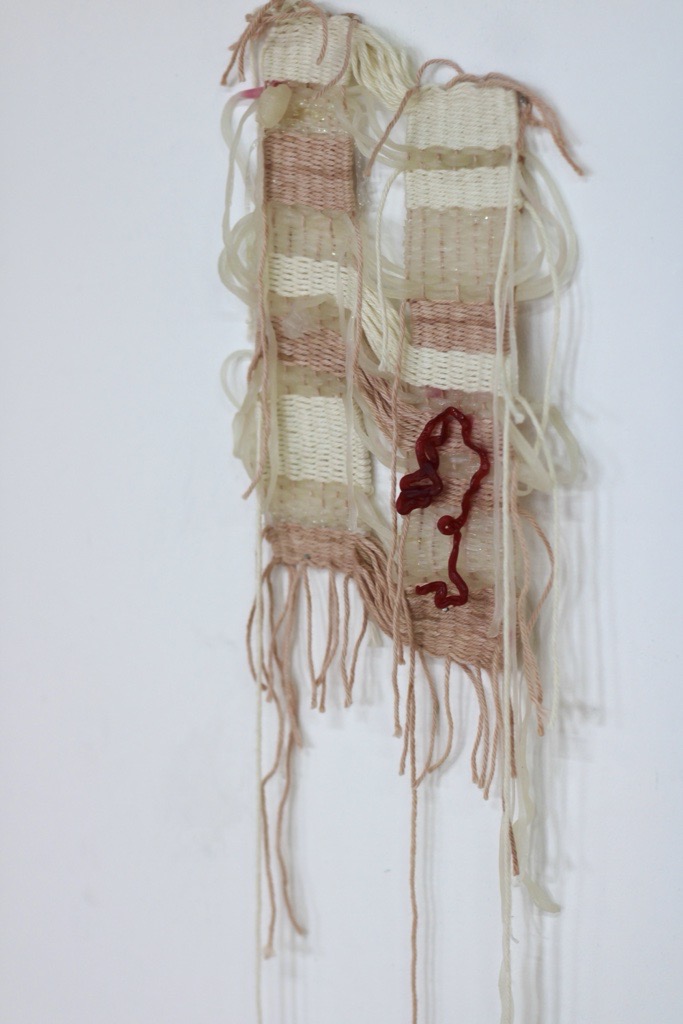
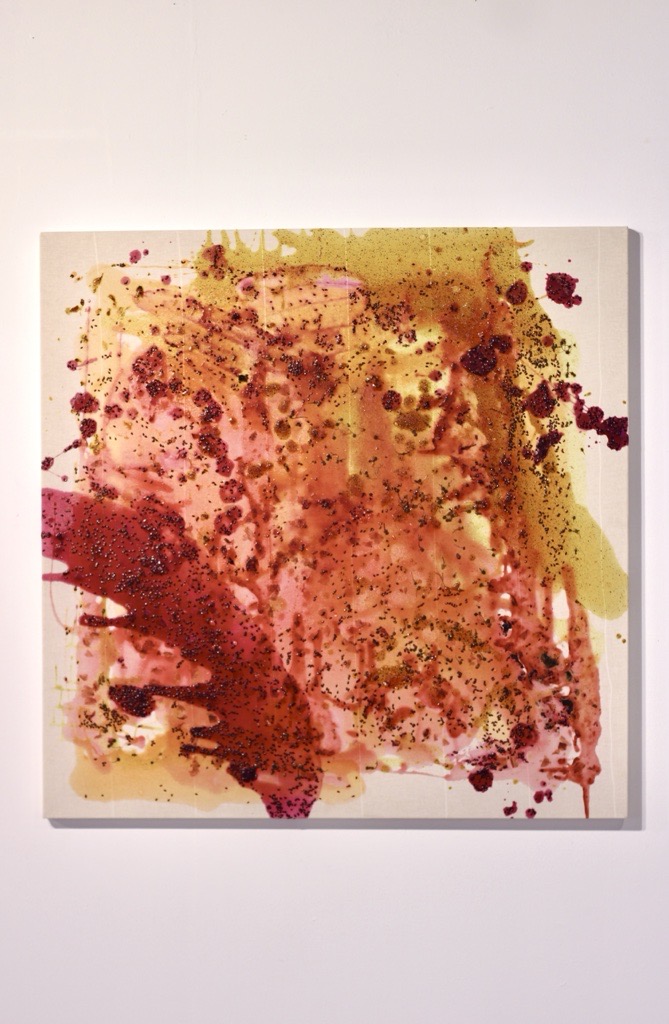
The body of work produced throughout the residency consists of three main processes: the ‘drawings’ – agar agar pigments and plastics set onto recycled cotton and calico fabric; the ‘weavings’ – alginate yarn and cotton, or agar agar fabric, woven together; and the ‘fabrics’ – the agar agar plastic set into thin sheets.
As this was the first occasion of creating biomaterials outside of my usual sites of working, one of the first major influences I encountered was the environmental impact of the gallery space. The agar agar drying times were significantly increased, once set they could be prone to melting, and nearly all of these pieces grew some mould (subsequently killed with vinegar). As for the chia seed tapestry experiment, where, when I tested this technique, the seeds would take root on the cotton fabric and then grow into microgreens, during the residency the seeds died, and started to rot on the fabric (I think I had overwatered them, as I was used to warmer climates). Not only did this create an entirely different visual effect from what I had expected, but it also gave off an odour, which became quite stimulating in the space. A very sweet, kind of decaying, vegetal/compost scent which was hard to avoid when looking at any of the works in the gallery. It seemed to teeter between being a disrupting and complementary stimulus alongside the other work. Therefore, the environment became a collaborator in the pieces, being an intervention in the materiality of the work which I had to reason with, bringing into focus the idea of how we live amongst wider ecosystems, and often how we are blind to this relationship with nature.
Not only did the environment impact the physical works themselves, but it also influenced my own struggles with my mental health, which seeped in, thematically, into the work. I felt an ephemeral ooze myself – so many intense, harsh feelings coming out of me with little control over them but also knowing it would eventually pass. Reading letters at the time by Rainer Maria Rilke, who often describes an essential solitude and it’s links to a necessity to create, I had a sense of leaning into the feeling of being alone, feeling lost and spiralling, rather than busying or distracting myself (referenced in the title of It can’t catch a moving target). I also visited Leeds Art Gallery during the residency period and saw Bas Jan Ader’s I’m Too Sad to Tell You and felt incredibly moved by the honesty of the film. This highlighted my negative affect, contrasted with an energy and drive – a true spiralling moment, constantly moving, going round in circles, growing and expanding but without direction or linearity. And so, the black charcoal (a natural detoxifying ingredient) agar agar spiral drawing was born (with the title stolen from Ader), solidifying my own psychological experience within the project on a conceptual level. If I were to visualise it, my mental health physically manifests as being unruly and tangible – it’s very tactile in how I see it. A difficult moment for me is described as a ‘wobble’, kind of repulsive but also captivating, it seems to move and reverberate like jelly. Agar agar is quite wobbly in the way it sets as a material, and it felt like an effective material to represent the sense of spiralling for I’m too sad to tell you and throughout the duration of the project. This physical displacement within the residency therefore influencing both the materiality and thematic connotations of the artworks, and cultivating a conversation between them as well.
After returning to London, the biomaterials have done well to survive with the differing environmental factors, now, to test the true cyclical and sustainable nature of the materials, I have buried some of the agar agar fabrics in my compost heap, to see if they will (and in theory they can) naturally biodegrade. As they were made by plants, they will naturally return to feed the garden. I’ve just discovered in writing this piece that ‘ephemeral’ is also a name for certain types of plants; as the definition of the word suggests, these plants tend to have shorter life spans, often blooming early in the season and dying in midsummer. It feels like a true full circle moment, to discover the multi-layered definitions and ecological connotation of the word. And, as for the ooze, ‘to slowly trickle or seep out of something’ – a wish I hope to fulfil with my creative practice, to allow it to continue flowing from me, at whatever pace I can manage. It (everything, my artworks, my emotions, the natural world, all the stuff) all just keeps coming out, slowly, but continuously, until it fades or disappears, a constant cycle, swings and roundabouts, ephemeral ooze.
October 2025


Further information on the residency can be found via Everybody Arts’ website, here.

 daisydickens.com